Friday, 5 September 2014

New Water Standards Now Available

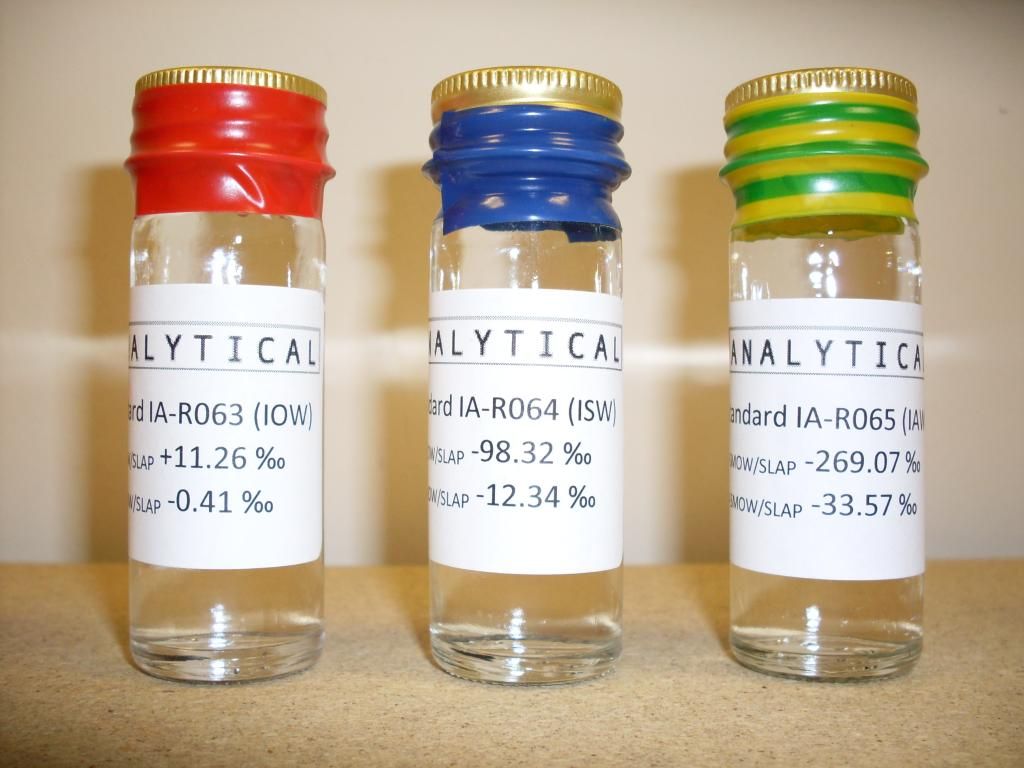
Such has been the popularity of our range of deuterium and oxygen-18 water standards, our stock of natural water standards came to an end. These have now been replaced with a new set comprising of three waters that are appropriate for use as working standards for natural abundance measurements. The details of the new standards are (values are reported as delta (permil)versus V-SMOW/SLAP):

IA-R063 (Zero water) 2H = +11.26, 18O = -0.41

IA-R064 (Medium natural water) 2H = -98.32, 18O = -12.34

IA-R065 (Low natural water) 2H = -269.07, 18O = -33.57

All standards have been calibrated using equilibration and continuous flow - isotope ratio mass spectrometry against V-SMOW2 and were scale corrected using SLAP2.

You can feel assured that you are buying a standard that is in routine use in our own laboratory fifty two weeks a year. The standards are available to purchase directly from ourselves or from Elemental Microanalysis Ltd.

Friday, 30 November 2012

Europa Scientific Instruments Needed

We're always looking to improve the services we provide by adding more equipment to the lab. If you have Europa Scientific/PDZ Europa/Sercon instruments that you no longer need, we would be very interested to hear from you.

In particular, we are interested in acquiring ANCA-SL and ANCA-GSL systems (including Gilson 222 autosamplers). Either with or without 20-20 mass spectrometers. We can collect equipment in the UK or in some other European Countries. Further afield we can arrange a shipping company to collect the equipment from you.

So if you have a system that is no longer being used and want to realize some income from it or simply want to free up space, please contact me via our e-mail address at the top of this blog. You will also be safe in the knowledge that we will put your equipment to very good use and it will soon be helping someone get their samples measured.

Steve Brookes


Monday, 12 November 2012

New Arrangements for Customers in Australia and New Zealand

As of November 2012 all of our customers in Australia and New Zealand, who were previously served on our behalf by Isolytix, may now contact us directly. All enquiries are welcome whether they be for analysis of new samples or questions about data for previous samples that we have measured for you.

Steve Brookes
12 November 2012

Monday, 21 November 2011

2012 Student Awards and SIMSUG


This week I'll be attending the Stable Isotope Mass Spectrometry User Group (SIMSUG) meeting at Lancaster University:

SIMSUG 2011, Lancaster University, 23rd and 24th November 2011

To coincide with the meeting we are announcing our 2012 Student Research Awards competition. Hopefully, I will get to meet some of our customers in Lancaster but you don't have to be at the meeting to enter the competition as the details are below.

The closing date for entries is 31st January 2012. Good luck to everyone that applies.

Steve Brookes

2012 Student Research Awards

Iso-Analytical provides research awards to encourage students to include stable isotope analyses in their research projects, with emphasis on the use of stable isotopes to explain original research questions.

Iso-Analytical is offering a total prize fund of $5000 towards stable isotope analysis from our catalogue of analytical services for d2H, d13C, d15N, d18O and d34S.

Gold Award : $3000 (approx. 75 sample analyses)

Grant of $3000 (2250€*) towards cost of stable isotope analyses available to students engaged in research at an accredited academic institute.

Silver Award : $2000 (approx. 50 sample analyses)

Grant of US $2000 (1500€*) towards cost of stable isotope analyses available to students engaged in research at an accredited academic institute.

* Based on current exchange rates


How to Apply

The research awards are competitive and will be offered based on the evaluation of applications consisting of an abstract and 300 word summary paper. Applications should concisely describe the research project, the information likely to be gained from isotope analysis, and the availability of materials for analysis. Applications will be accepted by post, fax or Email.

The deadline for receipt of applications is January 31, 2012

Applications should be e-mailed to:

steve@iso-analytical.com with “Research Awards 2012” in the subject line


Competition Rules

(1) Applicants must be enrolled in post-graduate or post-doctoral research at an academic institute.
(2) Applications must include applicants name, address, telephone number, e-mail and academic qualifications and supervisor’s name and address.
(3) The prizes will consist of stable isotope analyses of d2H, d13C, d15N, d18O or d34S, or combination thereof, to the value of $3000 and $2000 for the Gold and Silver awards respectively.
(4) Samples must be submitted by the competition winners to Iso-Analytical for analysis before March 31, 2013. Iso-Analytical will report results to competition winners within 3 months of receiving samples.
(5) Research awards will be acknowledged in any thesis or subsequent publications, copies of which will be provided to Iso-Analytical.
(6) The winners will be notified by March 31, 2012.

Monday, 3 October 2011

Recent Published Articles

We're always pleased to see the fruits of our customers' work. Here are some references of published journal articles that we've recently received:


‘Differences in food assimilation between two coot species assessed with stable isotopes and particle size in faeces: Linking physiology and conservation.’
Amat Juan A, Comparative Biochemistry and Physiology, Part A (2008), 217-223


‘Sulphur stable isotopes can distinguish trophic dependence on sediments and plankton in boreal lakes.’
Crosietere Louis et al, Freshwater Biology (2009), 54, 1006-1015


‘Unravelling complexities in benthic food webs using a dual stable isotope (hydrogen and carbon) approach.’
Deines Peter et al, Freshwater Biology (2009), 54, 2243-2251


‘Beef authentication and retrospective dietary variation using stable isotope ratio analysis of bovine muscle and tail hair.’
Osorio, M Teresa et al, J. Agric Food Chem (2011), 59, 3295-3305


‘Multielement isotope analysis of bovine muscle for determination of International Geographical Origin of Meat.’
Osorio, M Teresa et al, J. Agric Food Chem (2011), 59, 3285-3294


‘Greater flamingos Phoenicopterus roseus are partial capital breeders.’
Rendon Miguel A et al, J. Avian Biol. (2011), 42, 210-213


There is also a list of earlier published articles on our website.

Tuesday, 27 September 2011

Student Placements During the Summer

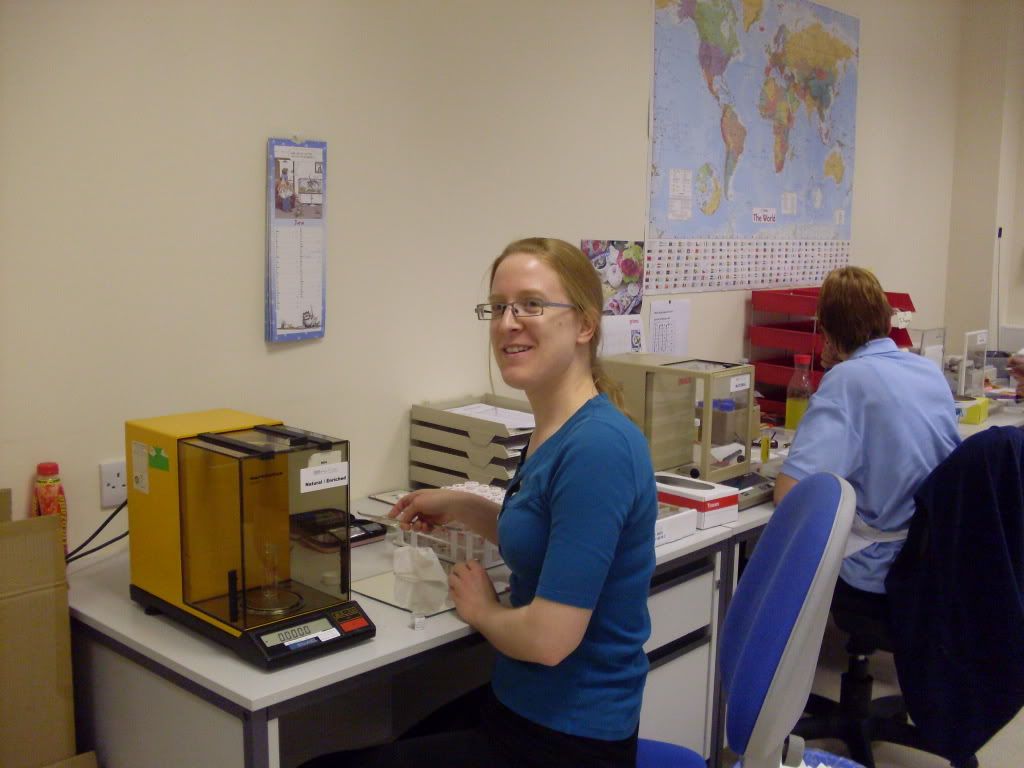
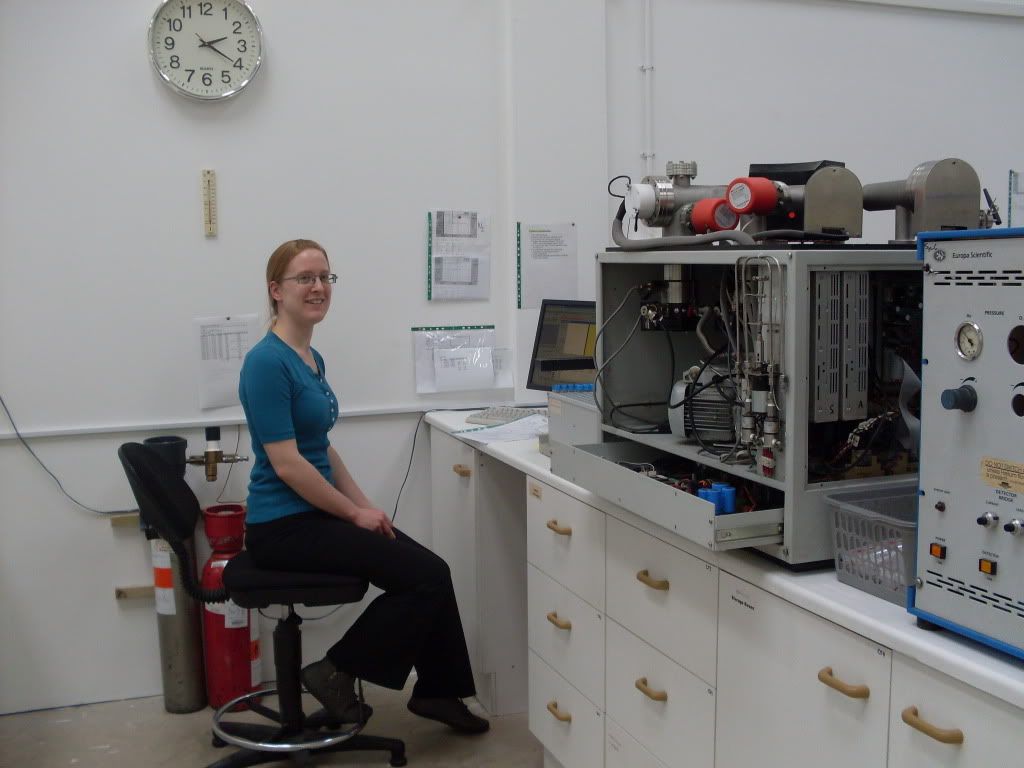
This June we welcomed one of our customers to the lab to gain first hand experience of stable isotope analysis. Dr Irene Maier recently took up a post doctoral position in the Quaternary Geology and Climate unit of the Norwegian Geological Survey (NGU), Trondheim. Under the direction of Dr Jochen Knies, Irene is being supported by an EU Marie Curie award to work on their Changing Arctic and Sub-Arctic project.

During her visit to the laboratory Irene gained practical experience of preparing marine sediments for carbon and nitrogen isotope analysis. This involved; decarbonating the sediments in preparation for organic carbon isotope analysis, removal of organic nitrogen from the sediments and preparation of the different sediment fractions for analysis on the mass spectrometer systems. By doing this, Irene now has an understanding of the processes involved in stable isotope analysis which should come in useful when she receives data for future samples that we will be measuring for NGU.

Irene preparing samples at one of the laboratory balances (above) and learning how to operate one of the isotope ratio mass spectrometers (below)


In July we were joined by a second student for a summer placement. This time it was Charlotte who had just completed the first year of her degree course in environmental sciences at Manchester University. Charlotte spent a couple of weeks with us gaining practical experience of common laboratory techniques which included; centrifuging, pipetting, ion-exchange chromatography and using 5 place balances to weigh and prepare samples in tin capsules ready for isotope analysis.


Friday, 1 July 2011

The Lab continues to be very busy

It was around this time last year that we started to see an increase in the demand for analysis of samples. That demand has remained in place and I can safely say that our lab has never been busier. This is good news and not so good news. Good news because it is very encouraging to see that so many of you are increasing the amount of research that you are using stable isotopes for. The not so good news is that the increased number of samples that we have been receiving has meant that the lead time for analysis has increased for most sample types.

In order to meet the increased demand, we did two things in the first quarter of this year. First off, we re-furbished and upgraded one of the mass spectrometers that was under-utilized. This has given us extra capacity for high temperature continuous flow - IRMS and extra capacity for deuterium measurements. Secondly, we recruited another person for the technical support staff, Joanna Bruce. Joanna has already been trained up to prepare samples and is now doing so on a day to day basis alongside the rest of the team (Anne, Margaret and Sharon).

Even with this extra capacity in place the lead times for analysis are still longer than they used to be and what we would like them to be. We apologize to you for that but would also like to thank all of our customers for your patience. All samples that arrive at our facility are logged in, in the order that they are received and join the queue behind orders that have already arrived. We think and hope that this is the fairest way for all of our customers.

It is good to know that people are willing to wait a bit longer because of the quality of the service that we provide.

Thursday, 20 May 2010

Row for Heroes


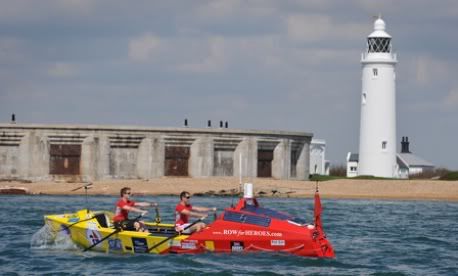
On Wednesday 12th May 2010, two Army Doctors, Nick Dennison and Hamish Reid, set out to Row around Great Britain in order to raise money for Help for Heroes and the Army Benevolent Fund. In doing so they will enter the record books by being the first pair to complete this Herculean task.

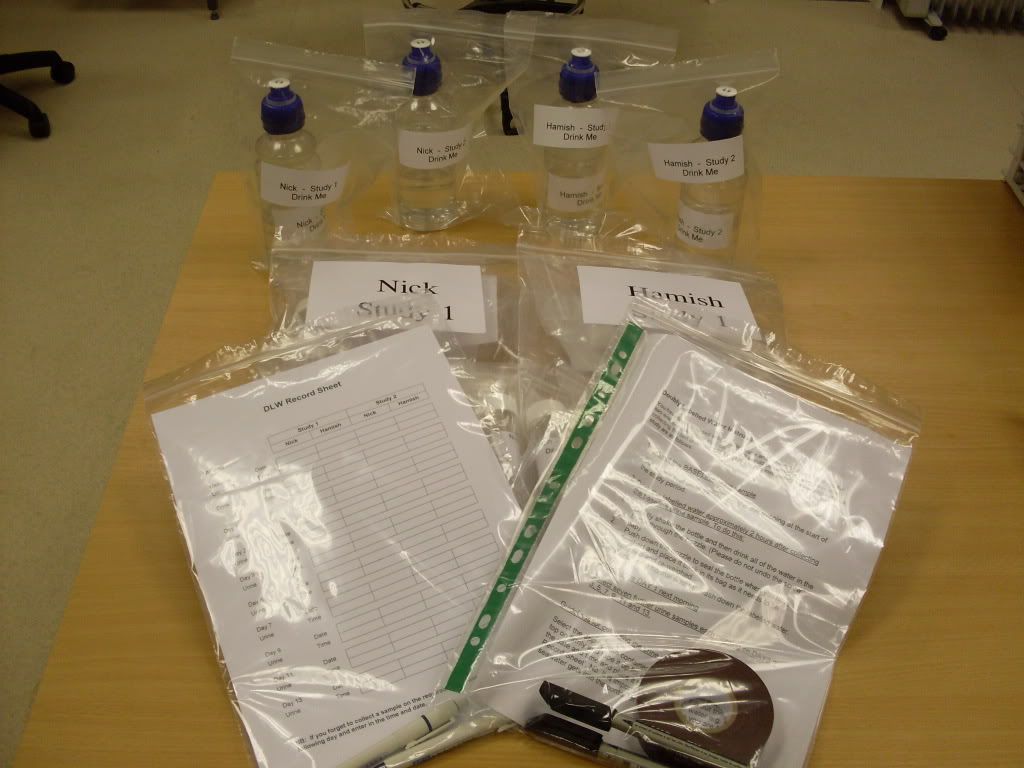
The charity rowers wanted to monitor their energy expenditure during the challenge. So we at Iso-Analytical volunteered to help out by providing them with a doubly labelled water kit which they could use during the trip. The kit consisted of doubly labelled water drinks, collection containers for urine samples and everything needed to keep records of the sampling times:


On their return we will measure the two sets of urine samples that they will have collected from two study periods. Measuring the differential loss of deuterium from the body (only lost as water) and oxygen-18 (lost as water and carbon dioxide) allows us to calculate their total energy expenditure over study periods as long as two weeks. We're expecting Nick and Hamish's energy expenditures to be somewhat higher than normal!

To find out more about the challenge, track their progress and the charity they are supporting, please visit their website: Row for Heroes

Thursday, 25 March 2010

Iso-Analytical Student Award Provides a First for Deuterium Analysis

Unravelling complexities in benthic food webs using a dual stable isotope (hydrogen and carbon) approach.

Peter Deines, Matthew J. Wooller and Jonathan Grey, Freshwater Biology (2009) 54, 2243-2251.

In the journal article above the authors provide preliminary evidence to suggest that hydrogen and carbon isotope values in macroinvertebrates may be used to distinguish between methane formation pathways and help to explain inter-depth and inter-specific differences between co-existing chironomid species found in the same lake.

Peter Deines of the Max Planck Institute for Limnology, Plon, Germany used his Iso-Analytical Student award to send samples to our laboratory for analysis. Samples of chironomid larvae collected from German lakes were measured for their deuterium abundance. As far as the authors are aware this is the first study to use deuterium as a second biochemical marker in combination with carbon-13 (measured in their own laboratory), to unravel linkages between microbial fauna in sediment and macroinvertebrate consumers.

Friday, 19 March 2010

SIMSUG 2010

28th to 30th April 2010, University of Exeter


The annual meeting of the Stable Isotope Mass Spectrometer Users Group (SIMSUG) presents an ideal opportunity to share our experiences of analysing stable isotopes both formally and informally. Registration for the meeting and accomodation and submission of abstracts is now open. More details can be found on the SIMSUG website which can be accessed at the link below:

SIMSUG 2010

Iso-Analytical are one of the sponsors of the meeting and will be in attendance throughout. I look forward to meeting new and existing customers and catching up with colleagues and friends I have met in the 30+ years I have been involved in research with stable isotopes.

Steve Brookes

Tuesday, 9 February 2010

Inter-laboratory Testing - Honey

Food analysis using Isotopic Techniques - Proficiency Testing Scheme.

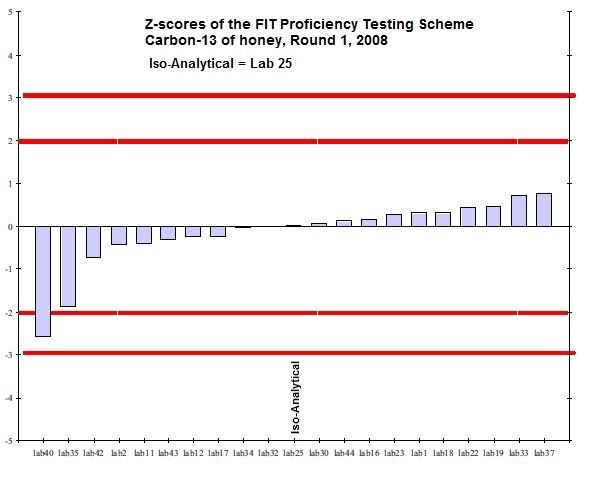
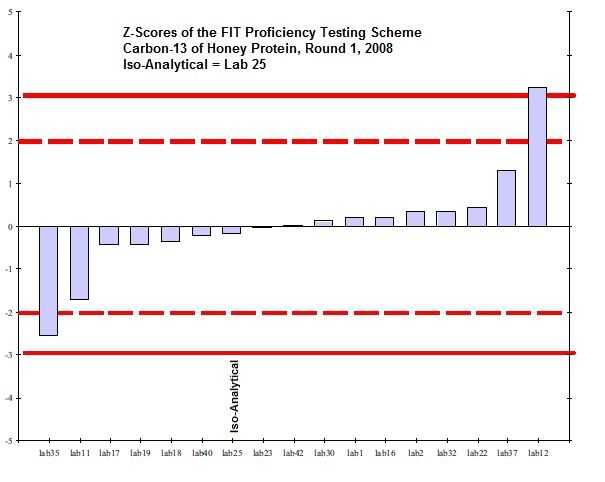
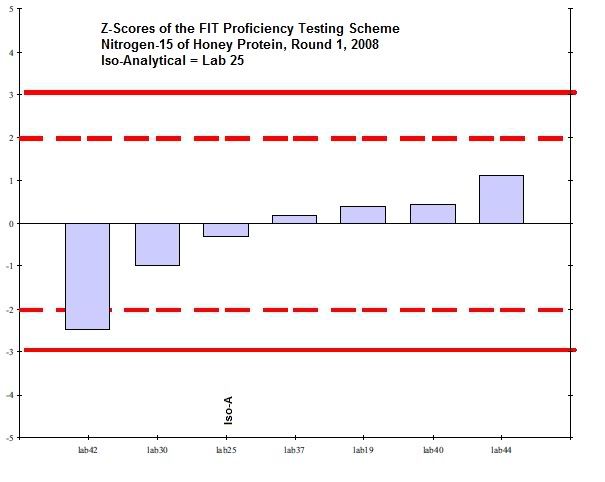
Results of carbon-13 and nitrogen-15 analysis of Honey undertaken in the first round of 2008 are shown below. The Z-scores (see explanation below the charts) show that the participating laboratories were in good agreement with each other and our own Z scores are comfortably in the desired range.


The evaluation of data is performed according to the ISO/IUPAC/AOAC International Harmonised Protocol for Proficiency Testing of analytical laboratories. Individual laboratories results are expressed as Z-scores:

Z = (x-X)/s

Where :
x is the reported result from the participating laboratory.
X is the assigned or "true" value for the analyte being determined. In this exercise the assigned values are taken as the robust mean of all reported results.
s is the target value for standard deviation. In this exercise the target SD values are derived from recently reported collaborative trial results or from the robust standard deviation of all reported values.

If X and s are good estimates of the population mean and standard deviation, and the underlying distributions are normal, Z is normally distributed with a mean of zero and unit standard deviation.

Tuesday, 24 November 2009

Almost one year on

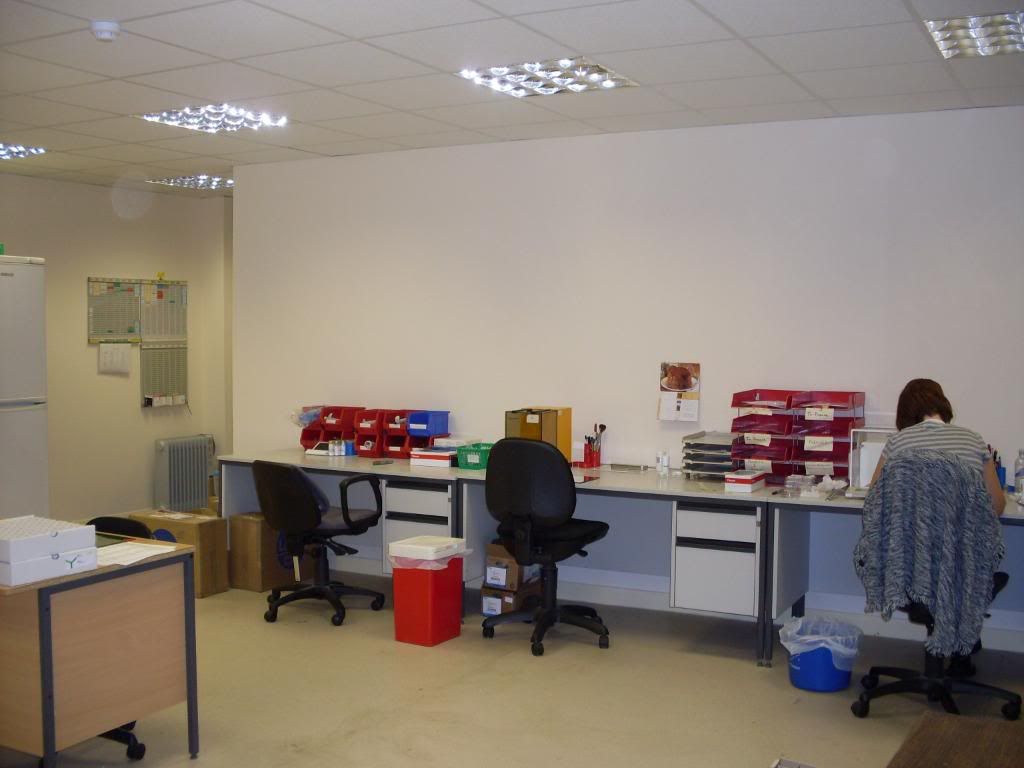
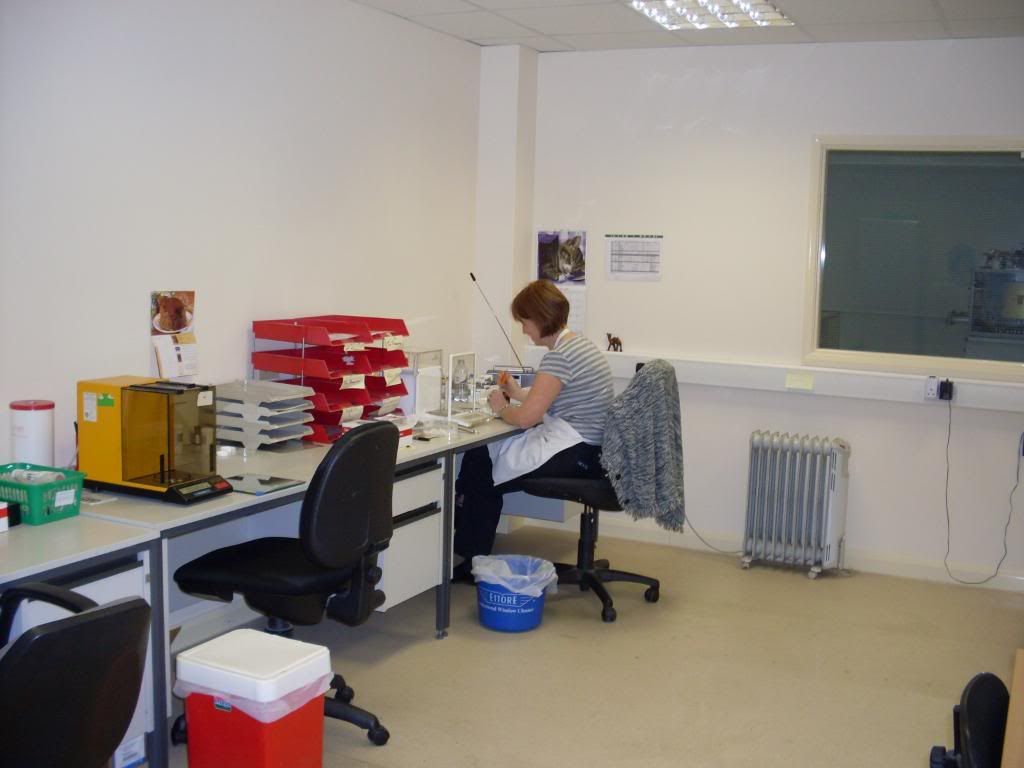
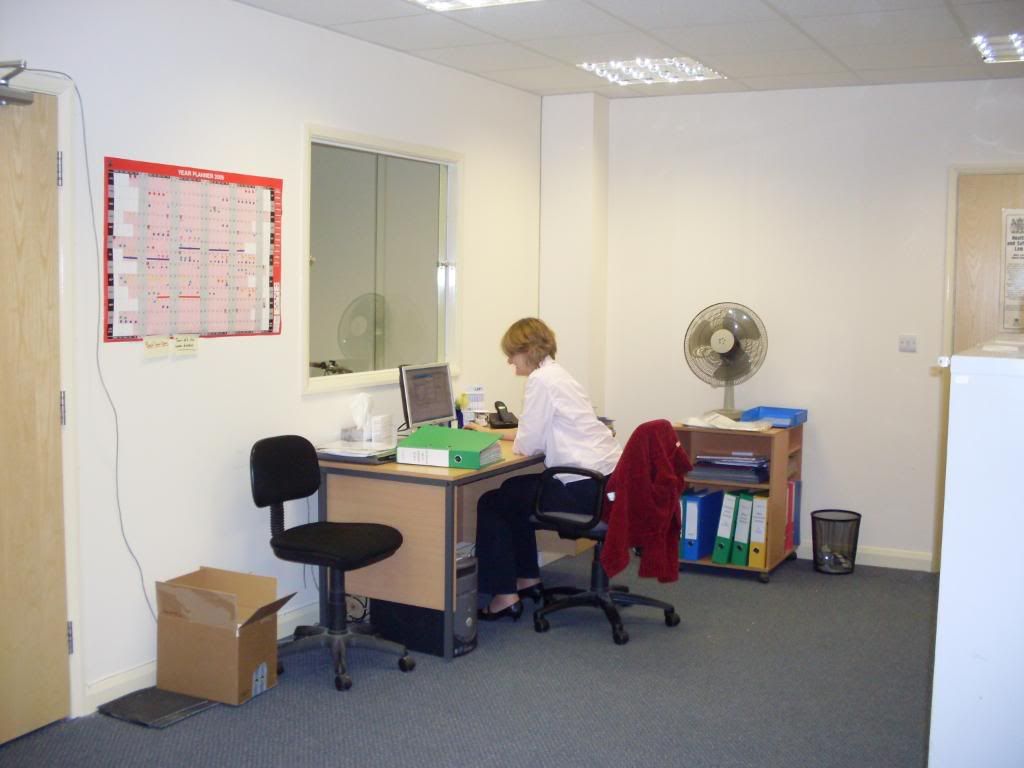
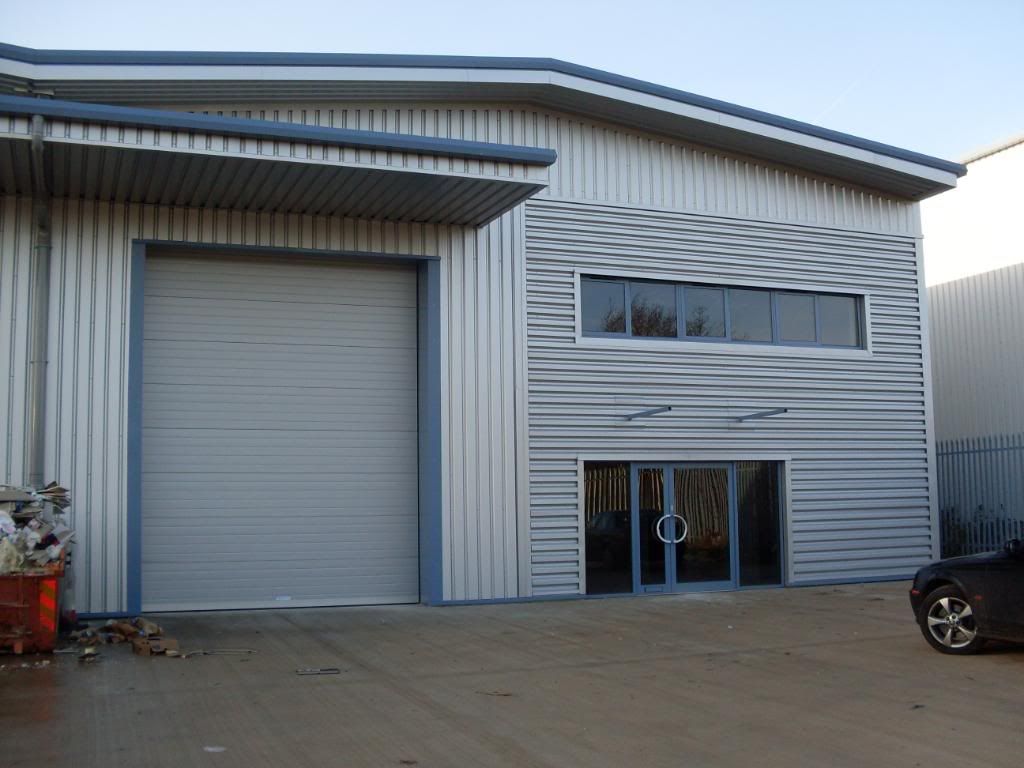
It's hard to believe that it will soon be a year since we moved into the new laboratory here in Crewe. All of the initial teething troubles are now out of the way and I'm glad to say that we're now settled for the years to come. All areas of the new building are now a lot more organised, leaving us free to concentrate on the day to day analysis of the samples you send us.

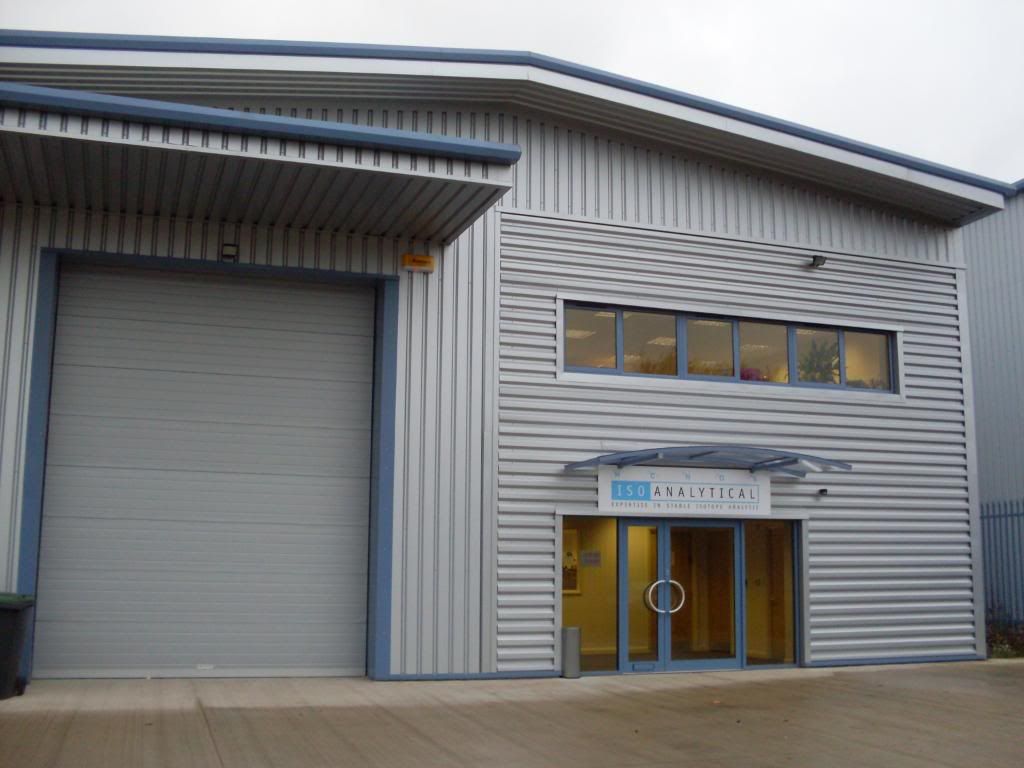
The building now has our name above the door:


The main instrument area is fully functional:


So too is the sample preparation area:


We have a new technician, Sharon Hinett, working on the team:


And the office areas are a much better place to work in:


There is plenty of space for storage of standards, spares and our (your) sample archive:

Monday, 20 April 2009

Thank You for Your Patience

I am please to say that we are well and truly settled in our new laboratory and offices and back up to speed with all of our normal services. The move cost us at least a month of analysis time which immediately impacted on the turnaround of results. So at the current time all orders are running behind the normal schedule. We must have a lot of busy customers out there because the backlog caused by the move has been compounded by an extraordinary influx of samples this year. We're currently running the instruments 7 days to keep up with the demand and have just taken on a new technician to help with sample preparation.

I would like to thank all of our customers for their patience at this time while we try to get to their samples, which are being analysed in the order in which they are received.

While our website and e-mail addresses have not been affected by the move, it was necessary to get new telephone numbers. These are now:

Tel: +44 (0)1270 509533
Fax: +44 (0)1270 509511

Steve Brookes

Monday, 26 January 2009

New Year, New Laboratory

As we entered our Tenth year of providing stable isotope analysis we took a big decision to move out of our leased home in to a purpose built facility. As of today, 26th January 2009, Iso-Analytical's new home is:

Iso-Analytical Ltd
Unit D, Phase 3, The Quantum
Marshfield Bank Business Park
Crewe
Cheshire
CW2 8UY
United Kingdom


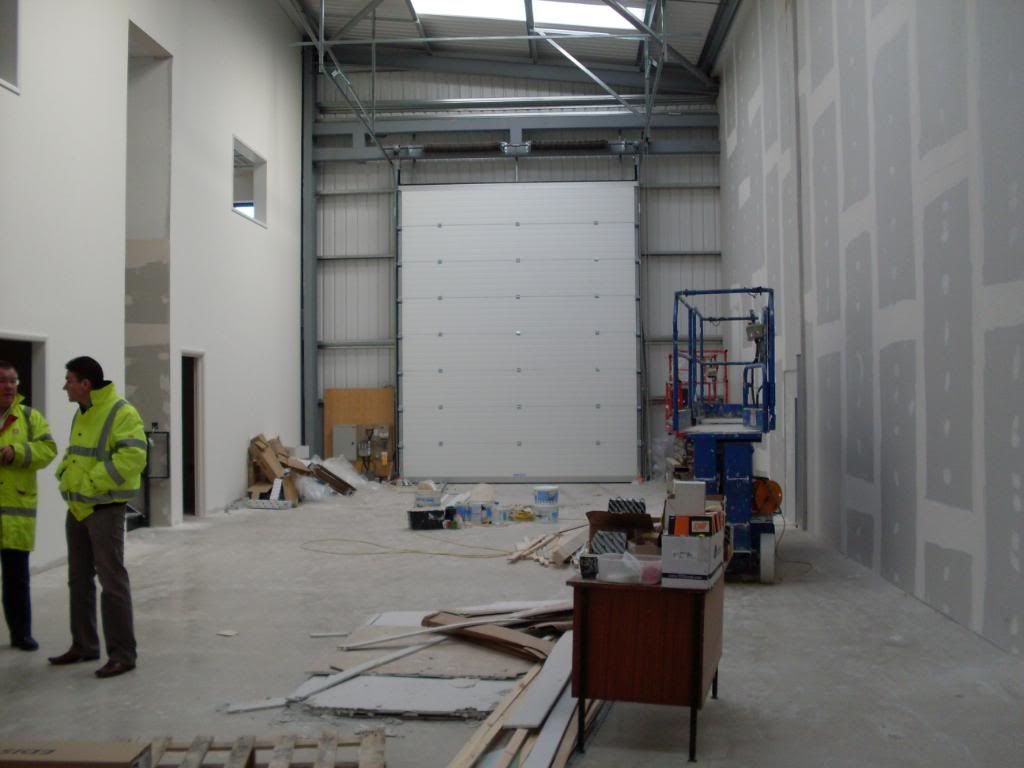
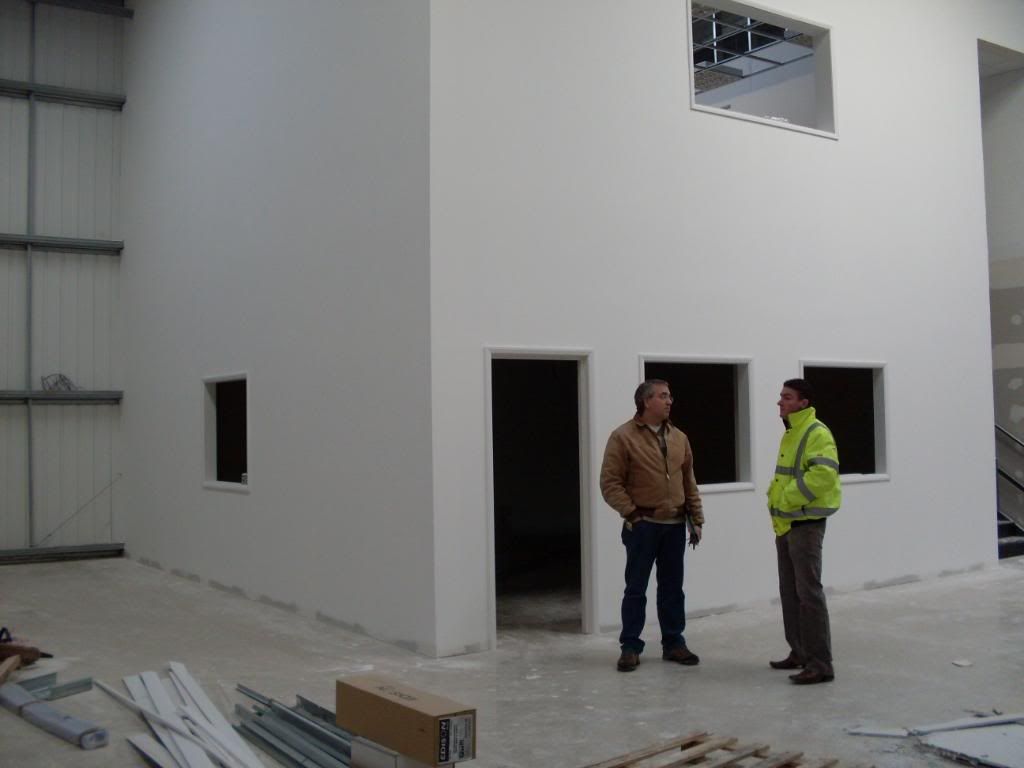
The planning started back in July of last year when we found a new building development close to where we were currently located. However, ready built stable isotope analysis laboratories don't really exist so we had to set about designing the layout of the building so that it would fulfill our current and future needs. This meant fitting in many visits to the new site to check progress in between analysing our customers samples. By December 2008 the building started to take shape as shown by the photos below:


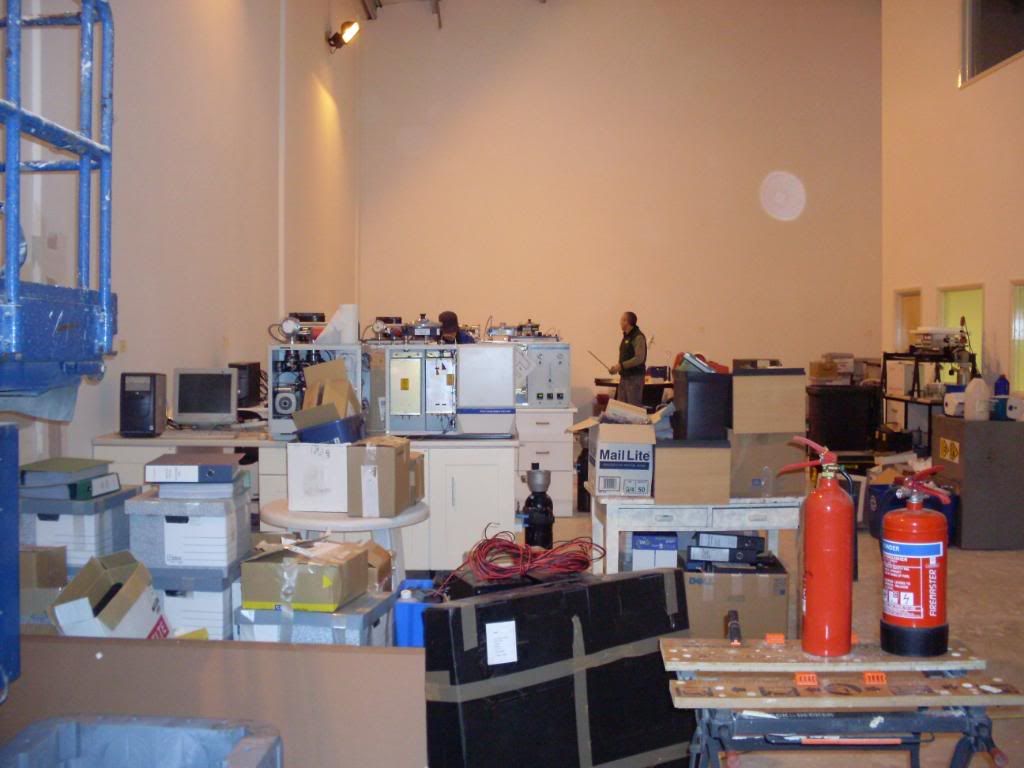
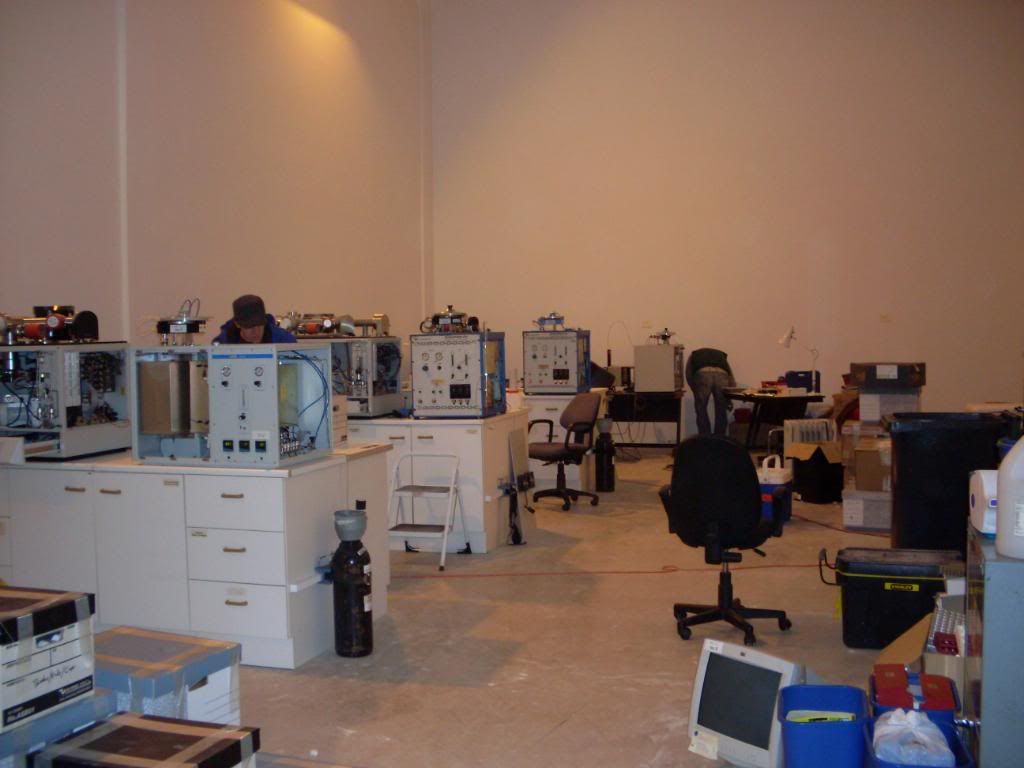
Now one week into the move, everything from the old lab is in and we're ready to start re-commissioning the instruments. With five instruments to move and all the associated sample preparation equipment (not to mention the office and IT equipment) this has been a major task. However, with twice the floor area of the previous premises we should be good for the next 20 years. The photos below show just what sort of chaos is involved with moving a stable isotope laboratory!


Monday, 22 December 2008

Isolytix - New Agent for New Zealand and Australia


We are pleased to announce that Ken Neal (Isolytix Ltd, Dunedin, New Zealand) has been appointed as our agent for Australia and New Zealand. We have known and worked with Ken for many years. He has been working in the field of Analytical Chemistry for 20 years since graduating from Sunderland Polytechnic ( now university) with a BSc (hons) in Chemical and Pharmaceutical Sciences. Previously he has worked in Industry, the health service, academia and private laboratory settings

Ken has been in the field of stable isotopes for the last 10 years starting with four years at Oxford University, then to laboratory manager at Bradford University stable isotope facility before heading to New Zealand where Ken worked at the Institute of geological and Nuclear Sciences before becoming laboratory manager at Isotrace, a private light stable isotope laboratory in Dunedin.

Ken has now started his own company, Isolytix Ltd which is based in Dunedin , New Zealand. This new venture will benefit both companies and its customers by providing a link between Iso-Analytical Ltd and those requiring stable isotope services in the Southern hemisphere. Isolytix will be able to ensure that samples reach Iso-Analytical on time with the minimum of fuss, track their progress during the analysis, report the results back to you and take care of all the associated administration and paperwork.

Contact details for Isolytix Ltd are:

Ken Neal
Director
Isolytix
Dunedin
New Zealand
www.isolytix.com

+64 021 824388

Wednesday, 2 April 2008

2007 Inter Laboratory Comparisons

As part of our quality system we participate in inter laboratory comparisons. One such scheme is the 'Food analysis using Isotopic Techniques - Proficiency Testing Scheme'. The first sample we analysed in 2007 was a wheat flour which required measurement of both carbon-13 and nitrogen-15. The charts below show the 'Z scores' of each laboratory. Essentially the Z score indicates how close a laboratory came to achieving the 'robust mean value' (excludes outliers) during the test. The closer your value is to zero, the closer you were to the robust mean. Laboratories with a Z score near to zero are near the middle of the chart.

Our Z score was close to zero for both the carbon-13 and nitrogen-15 measurements. Our position in the chart is highlighted by the red block (we are identified as lab1 for this study)

Photobucket

Photobucket

Later in 2007 we were involved in an inter laboratory comparison for the measurement of carbon-13 in honey. The requirement here was to measure the carbon-13 signature of the honey as a whole and to measure the carbon-13 of protein that we were required to extract from it. This is exactly the same as the 'carbon-13 honey test' that we provide clients with on a regular basis.

Again Iso-Analytical achieved close to zero Z scores which are identified by the red blocks in the charts below but this time we were allocated the code of lab2.

Photobucket

Photobucket

The excellent Z scores we achieved in these tests are testament to both the accuracy of our analytical methods and the laboratory standards we use during the analyses.

Sunday, 6 January 2008

Where are we?


When you send your samples off to us for analysis and have written our address on the parcel, have you ever wondered out of curiosity where the samples actually end up? Well, if you load up 'Google maps' and type in 'Iso-Analytical' you will be able to see where exactly our lab is based.


Happy New Year to all of our customers old and new.

Wednesday, 12 September 2007

Isotope Investigation of Retail Beef

Iso-Analytical has been working for a number of years in collaboration with Dr. Olaf Schmidt and colleagues from University College Dublin in isotopic investigation of beef with a view to the authentication of Irish beef. The first publication resulting from this work: Inferring the origin and dietary history of beef from C, N and S stable isotope ratio analysis. Food Chemistry (2005) 91:545-549 compared beef reared in the USA, Brazil, Europe and Ireland. A second publication on the seasonal variation of 13C, 15N and 34S in organic and conventional Irish beef is currently in press. In August, Bahar et al. gave a poster presentation on the rate of dietary carbon and nitrogen incorporation into bovine muscle at the 58th Annual meeting of the European Association for Animal Production. We have made a copy of the poster available for download in Adobe Acrobat (PDF) format here (1.9 MB).

Wednesday, 5 September 2007

Example Laboratory Reports

We have made a selection of example laboratory reports available for download in Adobe Acrobat (PDF) format from our website. Currently you will find example reports for the following services available:

13C-Urea Breath testing for detection of Helicobacter pylori infection
13C and 15N (dual isotope) analysis of Animal Tissue samples for ecological profiling
13C and 15N (dual isotope) analysis of Bone Collagen samples for dietary reconstruction
Deuterium (2H) analysis of core waters for Deuterium Tracing of core invasion
Doubly Labelled Water (DLW - 2H and 18O) analysis for measurement of Total Body Water composition
Fruit Juice carbon-13 testing for detection of undeclared addition of corn syrup
Honey carbon-13 testing (SCIRA & ISCIRA) for detection of economic adulteration

These example reports highlight our quality control procedures and the strong emphasis we place on the presentation of results.

Thursday, 23 August 2007

Analytical Service vs 'In House' Facility

It has often been mentioned to me by researchers that a project that generates somewhere between 10,000 and 20,000 samples would cost about the same to send them to us for analysis, as it would to purchase their own IRMS system (about $200,000). That is true. However, it is worth thinking a little deeper before spending that hard earned research grant money on your own mass spectrometer.

Other Costs

A new IRMS costs money to run. First the correct environment needs to be put in place which means a good clean power supply, temperature control (usually air conditioning), plenty of space to allow all round access to the equipment and high purity helium, oxygen and probably reference gases on tap. High quality consumables (quartz glassware, various chemical packings, combustion boats/cups) have to bought from specialist suppliers and are used in the analysis of each and every sample and reference material. While some reference materials can be bought in, it is necessary to set up at some cost a wide range of reliable, traceable working laboratory standards that need to be used on a daily basis. The equipment needs to be serviced which often means taking out an annual service contract with the manufacturer. Finally and probably most importantly there is the cost of the technician to prepare the samples (including any pre-analysis work up) run and maintain the instrument and analyze the data to check that it is both good and true. Despite the best efforts of IRMS manufacturers, the instruments today are still a long way from being (and probably never will be) black box technology so the right operator is of paramount importance.

Getting the best out of the instrument

Mass spectrometers, especially the isotope ratio variety, break down quite a lot. While service contracts are designed to help the user, the response time for an engineer to visit may be quite slow compared to more common scientific instruments. This is quite normal for a 'specialist' instruments because there are only a few 'specialist' engineers to go round. Quite often they have to visit you direct from the factory and therefore the further your lab is away from the factory, the longer the response time will be. In order to minimize instrument down time it is best if you can diagnose and fix the common failures yourself and this also means having access to some testing equipment and a stock of some expensive spare parts. While a single instrument can be fitted with a variety of sample preparation interfaces e.g. elemental analyser, gas handling device, dual-inlet and GC combustion interface, this in itself can lead to instrument down time. Switching from one interface to another often involves some manual work, connections have to be checked for leaks and there is always a 'settling' time while you wait for the new set up to become stable. Even apparently simple procedures of changing the elemental analyser from analysing one isotope to another, can lead to one or more days of downtime and the waste of expensive consumables if there are only a few samples that require a particular isotope measured.

Using an Analytical Service instead

The service we provide removes all of the above worries ensuring that you get your data on time and that the grant money is spent on publishing those results rather than buying an expensive piece of equipment. The key to providing this is our ability to keep the equipment running and having the facility to run different samples for different isotopes on five dedicated IRMS systems. Not to mention that the analysis is done by highly experienced operators and support staff that know how to deal with many different types of sample and how to obtain the best results for each. With the discount we provide for academic research and the potential for sending samples in part-state of readiness (e.g. pre-capsulated), you may be suprised just how far your research grant might stretch.

Steve Brookes